


Inside the Teenage Brain: A Pediatrician’s Diary of Mornings, Dares, and Closed Doors.
It’s 6:15am. I am standing outside my teen’s bedroom door for the THIRD time. I have used my normal voice. I have used my “I’m not angry, just disappointed” voice. I am about to use The Voice. You know the one. The one your own mother used on you.
” WAKE. UP.”
Nothing. Silence. Just the heavy, undisturbed breathing of a teenager who has clearly decided that school is optional today.
Welcome to life as a parent of a teenager. By the end of this post, my hope is that you’ll understand a little more about why teenagers are the way they are—and why you aren’t actually failing as a parent.

Round One: The Great Sleep Battle
So here’s what many parents don’t know. Teenage brains actually release the sleep hormone, melatonin, LATER at night and hold onto it LONGER in the morning than ours do. So while I’m up and dressed and all ready by 6am, his body is biologically stuck in deep REM sleep, genuinely convinced it is still 4:00 AM. He’s not being lazy on purpose — his internal clock is running on a completely different schedule than mine.
Does that make me less late for work? No. Does it help me view him as sleep-deprived rather than deliberately difficult? A little bit, yes
Round Two: The WhatsApp Group Chat Incident
By 4pm I get a call from school. Apparently my son agreed to some ridiculous dare from his friends — something about jumping off a wall to impress the group chat. He’s fine. Just a scraped knee, a dirty uniform and a very bruised ego (including mine!)
Here’s the neuroscience: the prefrontal cortex—the part of the brain that thinks ahead and weighs up “Is this actually a smart idea?”—is under construction until a person’s mid-to-late twenties. Meanwhile, the limbic system— which prioritizes social connection, peer approval, and instant thrills -—is fully online and running at maximum capacity.

So when the group chat says jump, apparently some brains just… jump.
I’m not just raising a reckless child. I am raising a normal teenage brain doing exactly what teenage brains are wired to do.
Round Three: The Silent Treatment at Dinner
By 7pm, we’re at the dinner table and I ask one simple, harmless question: “How was school?” He looks at me like I just insulted his entire ancestry and storms off to his room.
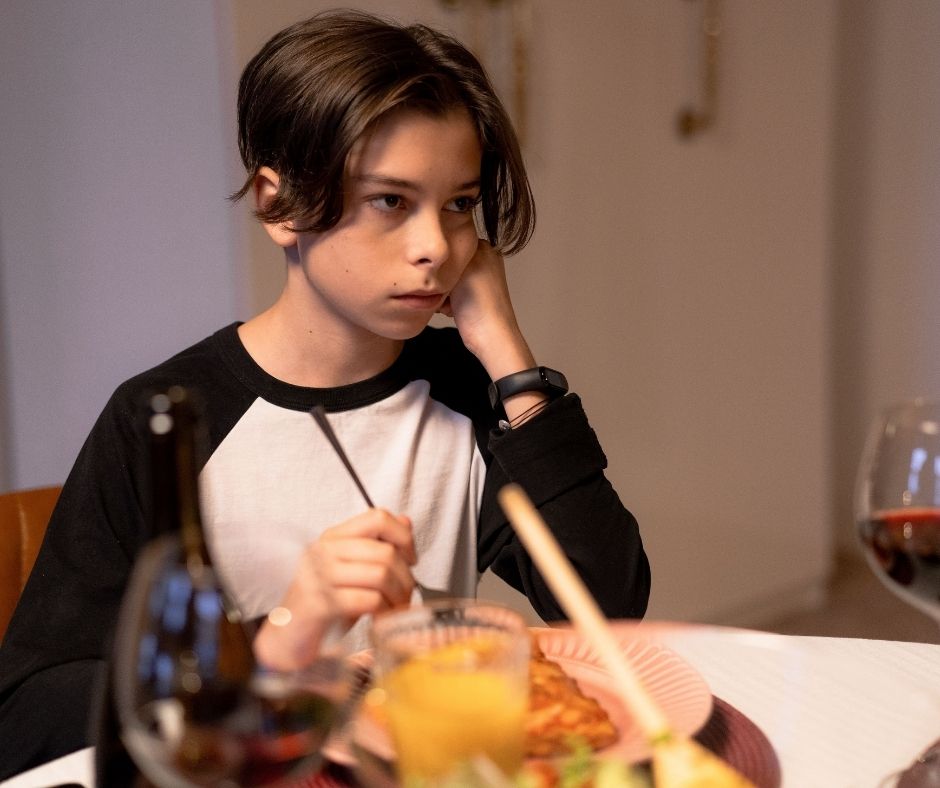
I used to take these explosive moments personally. Research shows that the amygdala (the brain’s threat-detection center) is hyper-reactive in adolescents. Teen brains can react to totally normal, low-stress moments as if they’re actually threatening or stressful — even when nothing bad is happening. So “how was school” in my head is a friendly question. In his head, sometimes, it can genuinely register as an interrogation.
Neutral facial expressions, low-stress questions, or simple check-ins can be misinterpreted by a tired teenage brain as hostile, invasive, or judgmental.
It doesn’t make the slammed door hurt less. But it does help me not slam one right back.
The Twist: He’s Actually Doing Fine
Here’s what turned my whole day around. Later that night I found him at the kitchen table, teaching himself something completely new off YouTube- coding- completely absorbed, completely focused, for almost two hours straight.
Teenage brains possess extraordinary neuroplasticity. The same wiring that makes them impulsive and moody also makes them exceptionally fast learners when something genuinely sparks their interest. The same brain that jumped off a wall for a dare had just taught itself to build a website from scratch.
Same kid. Same unfinished, still-growing brain.
Despite the friction, the sleep battles, and the sudden mood shifts, most teenagers emerge on the other side as capable, well-adjusted adults. The teenage brain isn’t only chaotic; it’s adaptable, growing, and remarkably resilient. And as parents, turns out, so are we.
From One Parent to Another
If you’re raising a teenager and some days you feel like you’re losing your mind — you’re not doing it wrong. You’re parenting a brain that is still, quite literally, under construction. The sleepiness, the risks, the mood swings, the sudden bursts of brilliance — it’s all part of the same wiring.
We Are Here to Support You
At Ellie Children’s Clinic in Lavington, Nairobi, we are here to talk to parents of pre-teens and teenagers who feel exhausted, confused, and worried about whether their child’s behavior is normal.
You don’t have to navigate adolescent growth, physical changes, or emotional development alone. Whether you need guidance on healthy sleep hygiene, developmental evaluations, or routine adolescent health checks, we are here for you with evidence- based, compassionate care.
Call or WhatsApp us to book a consultation.