Your Daughter is About to Get Her Period. Here Is Everything She and You Need to Know
Picture this.
Your 12-year-old daughter goes to the toilet at school, looks down, and sees blood in her underwear. She has no pad. She has no idea what is happening. She spends the rest of the day terrified to stand up, says nothing to anyone, and holds it together until she gets home.
This happens to thousands of girls every year. It doesn’t have to.
This article — written from a paediatrician’s perspective — covers everything parents and teenage girls need to understand about periods. Not in a textbook way. In a real, clear, useful way.
So What Actually Is a Period?
Think of the uterus as a very organised housekeeper.
Every month, it prepares a soft, cushioned lining — just in case a fertilised egg arrives and needs a place to grow. When no pregnancy occurs, the housekeeper thinks: “Nobody’s coming. Time to clean out and start fresh.”
That clean-out is a period.
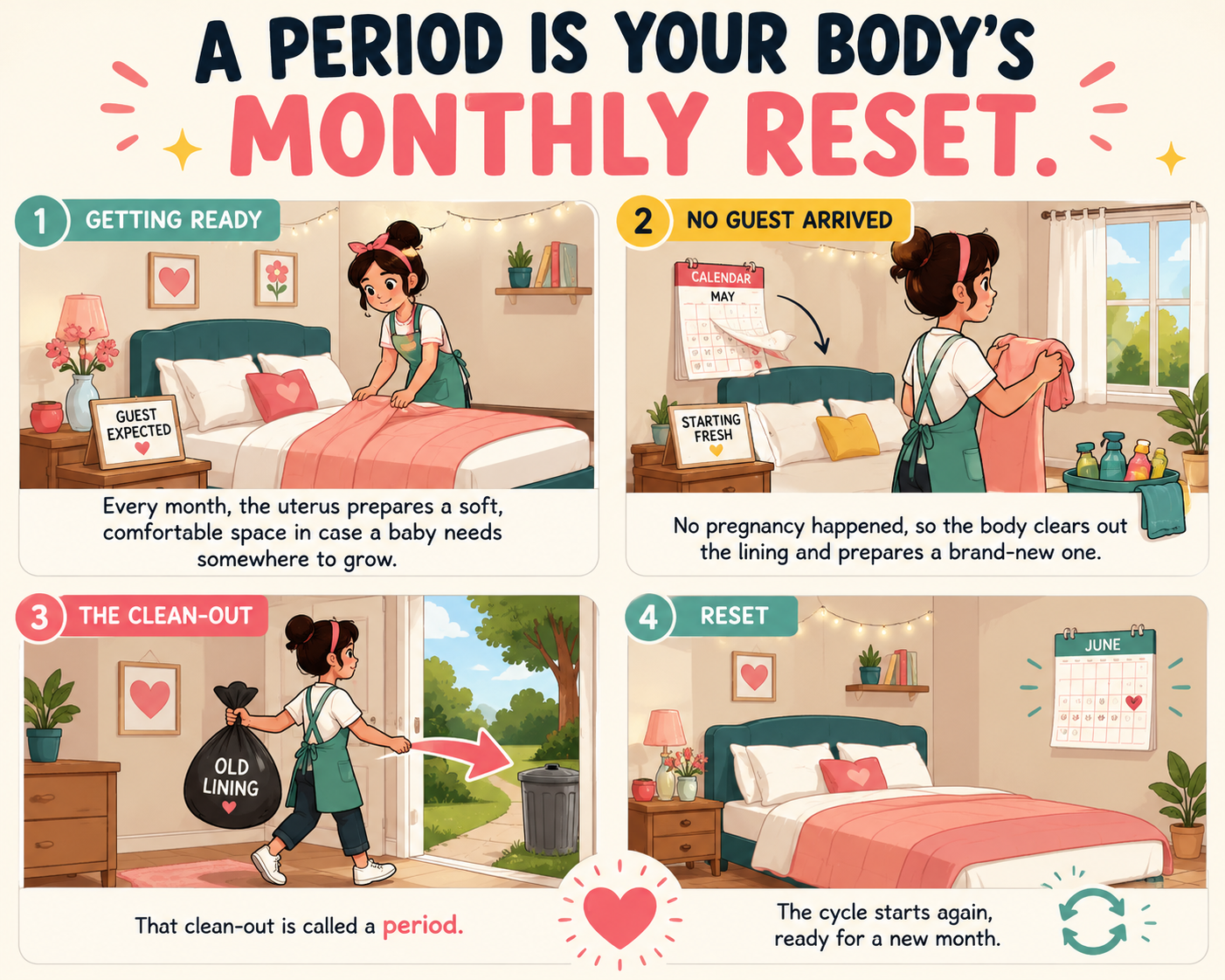
Blood and tissue leave the body through the vagina over several days. The process then resets and repeats — every single month — from a girl’s first period until her late 40s or 50s. It is not a disease. It is not an illness. It is the female reproductive system doing exactly what it was designed to do.
When Does It Begin?
Most girls in Kenya experience their first period between the ages of 10 and 15, with the average falling around 12 to 13 years. There is, however, no fixed date — every body runs on its own internal schedule.
A useful marker: the first period typically arrives about two years after breast development begins. So a girl who starts developing at age 10 can generally expect her period around age 12.
Other physical signs that a first period is approaching:
- Appearance of pubic and underarm hair
- A noticeable growth spurt in height
- Vaginal discharge — a clear or whitish fluid in the underwear — which usually begins 6 to 12 months before the first period
What Does a Period Feel Like?
The experience varies from girl to girl, but here is an honest picture of what is common.
In the days leading up to a period (PMS: Pre-Menstrual Period)
Some girls feel emotional — tearful over things that wouldn’t normally bother them. Others feel bloated, like they’ve swallowed something heavy. Sore breasts, mild headaches, feeling unusually irritable — all of this is the body’s hormonal shift signalling that a period is on its way. It typically resolves within a day or two of the period starting.
During the period itself
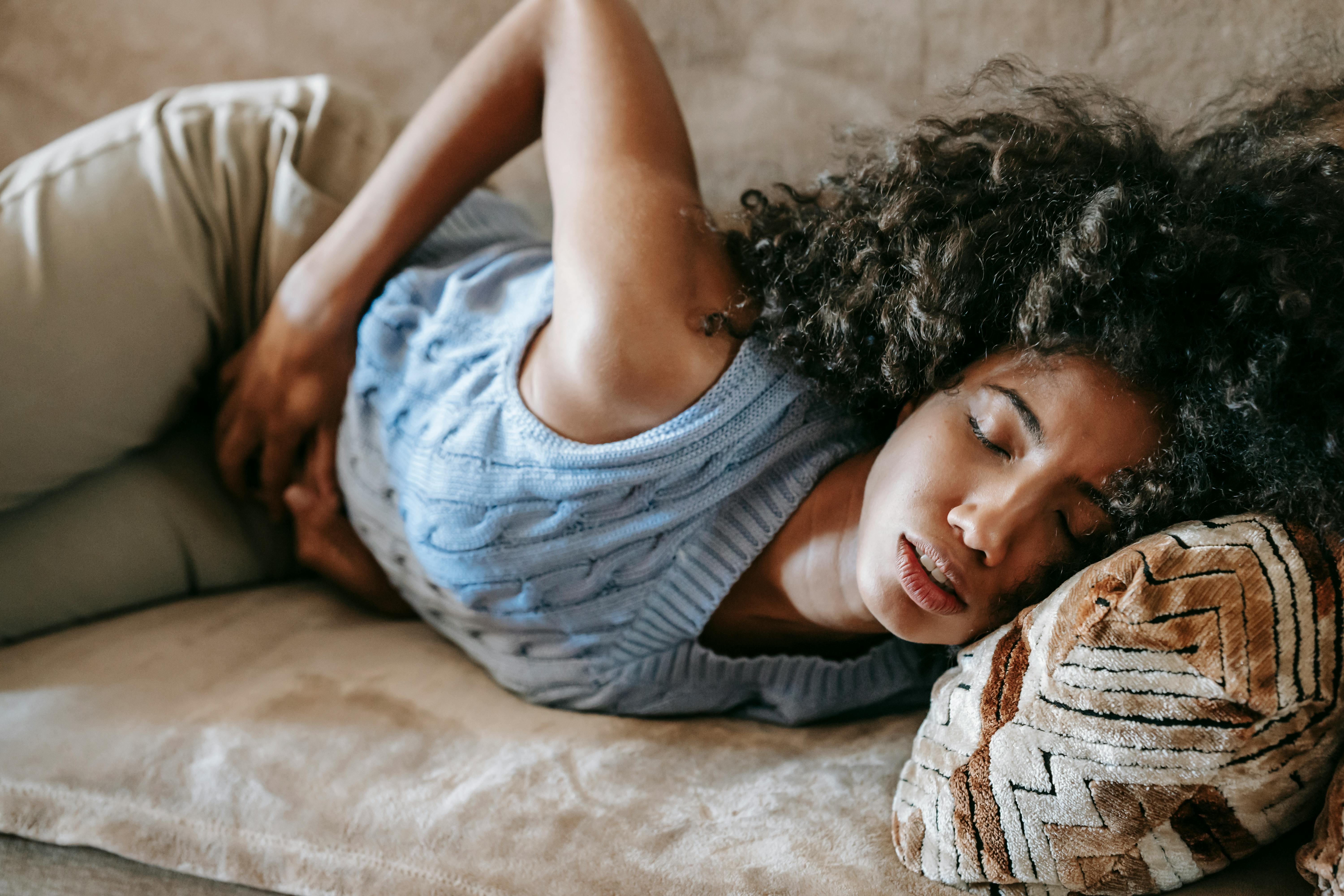
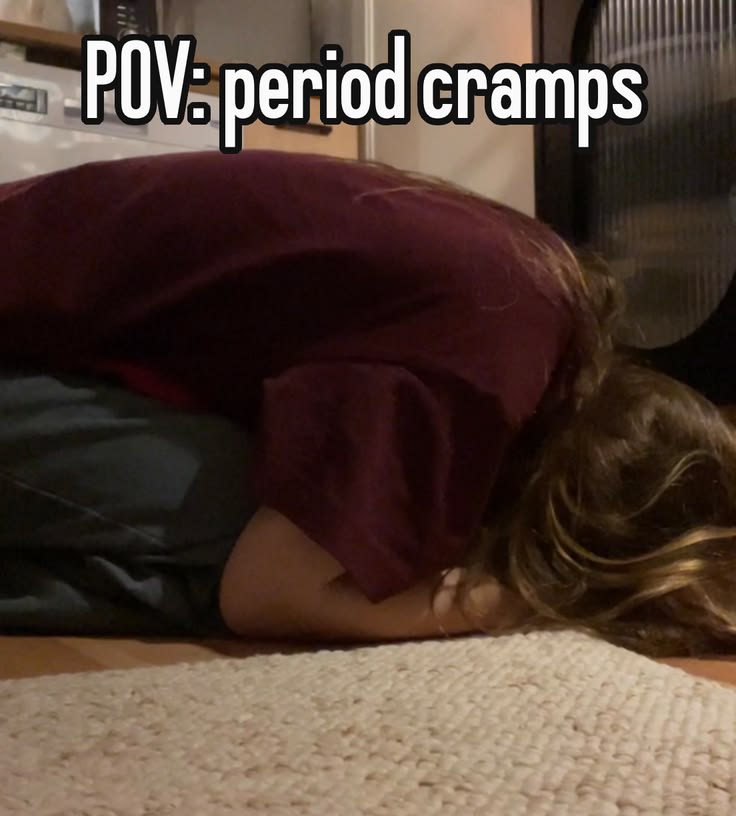
Cramping — a dull or aching pressure in the lower abdomen and sometimes the lower back — is the most common experience. The bleeding typically lasts between 2 and 7 days, heavier in the first couple of days and tapering toward the end.
Period blood ranges in colour from bright red to dark brown or almost black. Both ends of that spectrum are completely normal. Dark-coloured blood simply means it spent more time in the uterus before leaving.
One thing that surprises most people:
Despite how it can appear, the total blood loss during an entire period is usually only about 2 to 4 tablespoons — less than half a cup. The volume looks greater than it is because the blood mixes with the uterine lining and other natural fluid.
How Often Does a Period Come?
A menstrual cycle is measured from the first day of one period to the first day of the next. The average cycle is around 28 days, though anywhere between 21 and 35 days is considered normal.
When periods first begin, they are often irregular — arriving earlier or later than expected, or skipping a month entirely. This is not unusual. The body typically takes one to two years to settle into a consistent pattern.
Tracking a period on a simple calendar — or through a free app like Flo or Clue — helps girls anticipate their cycle and arrive prepared, rather than being caught off guard.
Managing a Period: The Options Available in Kenya
Girls in Kenya have several options for managing menstrual flow, ranging from disposable products to reusable alternatives.
Disposable Sanitary Pads
The most widely used option. Pads are available at virtually every supermarket, pharmacy, and local kiosk across Nairobi and beyond. Brands including Always, Softcare, Kotex, and Stayfree are widely stocked.
A pad attaches to the inside of the underwear and absorbs blood as it flows. A thicker, longer pad suits heavier days — typically the first one or two days — while a thinner pad is adequate as flow lightens.
Changing every 4 to 6 hours is important, not just when the pad feels saturated. Regular changes prevent odour and skin irritation. Used pads should be wrapped in tissue and disposed of in a bin — never flushed, as they will block a toilet.
Reusable Cloth Pads
An increasingly practical and cost-effective alternative. Reusable fabric pads are washed, dried, and used again — lasting months to years with proper care. For families where purchasing disposable pads monthly is a financial strain, reusable pads offer a meaningful solution.
Several organisations in Kenya distribute them at low or no cost, and they are available through health shops and platforms like Jumia.
Tampons: A tampon is a compact roll of absorbent material inserted into the vagina to absorb blood internally. It sits comfortably when inserted correctly and comes with a string for easy removal.
Tampons are safe for teenage girls from their very first period. They are available at larger supermarkets in Nairobi — Carrefour, Naivas, and QuickMart among them.
The key guidance on tampon use is straightforward: change every 4 to 8 hours, and never wear a tampon for longer than 8 hours. This reduces the very small but real risk of a condition called Toxic Shock Syndrome (TSS).
Menstrual Cups: A small, flexible silicone cup worn inside the vagina to collect — not absorb — menstrual blood. It can be worn for up to 12 hours, then emptied, rinsed, and reinserted. A single cup lasts for years, making it one of the most cost-effective options available.
Menstrual cups are sold on Jumia and at select pharmacies in Nairobi. There is a short learning curve during the first few uses, but most girls who try them find them highly convenient.
When Products Are Not Available
In an emergency — at school, away from home — folded clean cloth or tissue paper can serve as a temporary measure. This should never become a habitual substitute.
It is worth knowing that the Kenyan government has a programme providing free sanitary towels to girls in public primary and secondary schools. Where this is not being implemented, parents have the right to raise the matter with school administration or the Sub-County Education Office.
Period Pain: What Is Normal, What Is Not
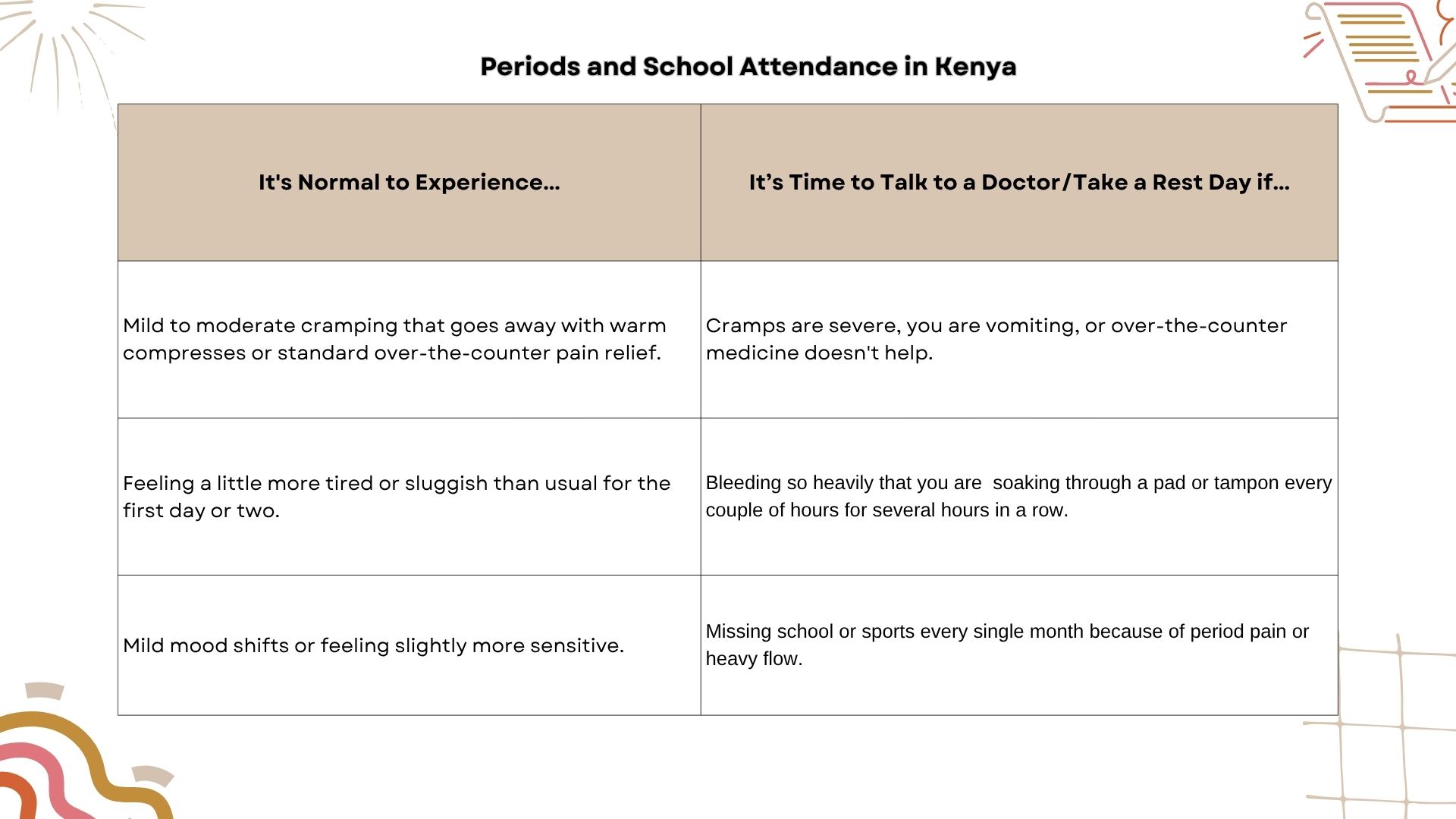
Cramps during menstruation are caused by the uterus contracting to expel its lining — essentially a muscle doing sustained, repetitive work. Mild cramping is a normal part of menstruation and is experienced by most girls to some degree.
For mild to moderate pain, the following are clinically established approaches:
- Ibuprofen (such as Brufen) — taken with food, and ideally started at the first sign of cramping rather than waiting for pain to become severe
- Heat applied to the lower abdomen — a hot water bottle or warm cloth is genuinely effective at relaxing the uterine muscle
- Light physical activity — short walks or stretching improve circulation and often reduce cramping
- Adequate hydration — reduces bloating and can ease associated discomfort
What is not normal — and what deserves medical attention:
Period pain that is severe enough to regularly prevent a girl from attending school or participating in daily activities is not something to simply push through. This level of pain may indicate an underlying condition such as endometriosis — a medical condition where uterine-like tissue grows outside the uterus, causing significant pain.
Endometriosis is treatable. In Kenya, it is widely under-diagnosed, partly because girls and their families are told that severe period pain is simply “part of being a woman.” It is not. Girls experiencing this level of pain deserve proper investigation and care.
Hygiene During a Period
- Menstrual hygiene is straightforward and doesn’t require any special products beyond what a girl already uses for regular personal care.
- The external genital area (vulva) can be washed gently with mild soap and water during bathing. The vagina itself is self-cleaning and does not require internal washing.
- Pads or tampons should be changed regularly — every 4 to 6 hours — even on lighter days.
- Hands should be washed before and after changing any menstrual product.
- Reusable cloth pads should be washed with soap and hot water and dried in direct sunlight before reuse.
Periods and School Attendance in Kenya
Research indicates that many girls in Kenya miss one to three days of school each month due to their period — from lack of products, unmanaged pain, or stigma. Across a school year, this amounts to weeks of lost learning.
This is a public health issue, and it is largely preventable.
What if I leak at school?
This is almost universally the number one worry. The key here is to normalize the accident (because it happens to everyone) while having a concrete action plan.
First, let’s normalize this: almost every woman you know has had a leak at some point. It is not a disaster, and it doesn’t mean you failed.
The “Just-in-Case” Kit: Pack a small, discreet pouch:
- 2–3 pads or tampons (or an extra pair of period underwear).
- A spare pair of regular underwear.
- A couple of wet wipes and extra tissues
Remember that human bodies don’t follow school timetables. It is entirely okay to ask a teacher to use the washroom between classes or even during a lesson
A girl who understands her cycle, carries a spare pad in her bag, knows where to access support at school, and feels no shame about her period is a girl who stays in class. Knowledge, preparation, and a stigma-free environment at home are the most effective interventions available — and they cost nothing.
Girls can participate fully in physical education, sports, examinations, and every other school activity during their period. A period is not a medical reason to opt out.
Many girls believe they should sit out of physical education (PE) or sports matches when they are on their period movement is actually medicine. When we exercise, our bodies release endorphins—the brain’s natural feel-good chemicals. Endorphins act like a natural pain reliever and can significantly reduce the intensity of period cramps.
You don’t have to run a marathon. If you’re feeling low on energy, heavy running can be swapped for a brisk walk, gentle stretching. Moving the body keeps the blood flowing and reduces pelvic congestion (the heavy, achy feeling).
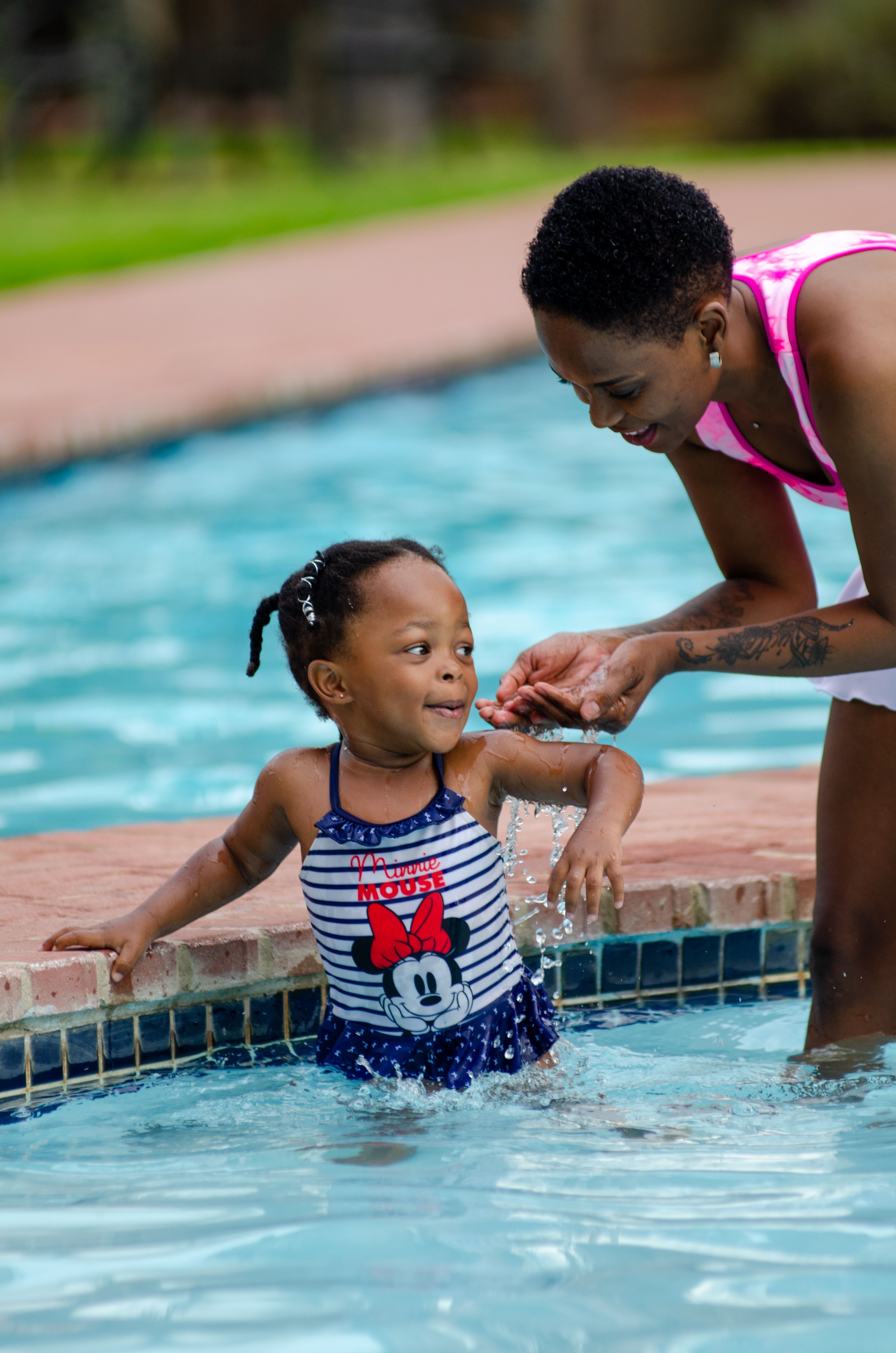
If swimming is involved, tampons or menstrual cups are safe options, but if you aren’t ready for them yet, it is completely fine to sit out the swimming portion of the day.
Listen to Your Body: While movement is great, intense cramps are real. If you are feeling completely drained, it is 100% okay to advocate for yourself and ask for a lighter session or to sit out.
Common Myths — and the Facts
- Several widely held beliefs about menstruation in Kenyan communities are medically inaccurate and cause real harm. The following deserve to be addressed directly.
- “You should not bathe during your period.” Bathing during menstruation is not only safe — it is encouraged. Warm water can ease cramping, and regular hygiene during a period is important for comfort and health.
- “Periods are dirty or unclean.” Menstrual blood is normal bodily tissue. It carries no unique risk of contamination. Cultural teachings that frame menstruation as impure have no medical basis
- “Exercise is not safe during a period.” Physical activity during menstruation is safe and often beneficial. Light to moderate exercise has been shown to reduce cramping and improve mood.
- “Using a tampon affects virginity.” A tampon is an absorbent product worn in the vaginal canal. It has no bearing whatsoever on virginity.
- “You cannot get pregnant during your period.” Pregnancy during menstruation is less common but not impossible — particularly in girls with shorter or irregular cycles. This is medically important information.
- “Severe period pain is normal and should be endured.” Mild cramping is normal. Severe, debilitating pain is not, and warrants clinical evaluation.
When to See a Paediatrician
- The majority of menstrual experiences are manageable without medical intervention. The following, however, warrant a clinical consultation:
- First period has not arrived by age 16
- Menstrual flow is extremely heavy — saturating a fully-absorbent pad every hour for several consecutive hours
- Periods regularly last longer than 7 days
- Pain severe enough to regularly prevent school attendance
- Previously regular periods that have stopped for 3 or more consecutive months
(without pregnancy) - Persistent dizziness, fainting, or extreme fatigue during menstruation — which may indicate anaemia from blood loss
- Vaginal discharge between periods with a strong odour, unusual colour, or associated itching
A paediatrician’s consultation room is a confidential, non-judgmental space. There is no period-related question or concern that is inappropriate to raise.
For Teenage Girls Reading This
Your body is not malfunctioning. It is not doing something shameful. It is doing something that half the world’s population experiences every single month.
Yes, cramps are uncomfortable. Yes, the timing is often inconvenient. But a period is not a limitation. Kenyan women run marathons, sit national exams, lead businesses, and head governments — all while menstruating.
Understanding your own body is one of the most powerful things you can do for your health. Know your cycle. Keep a pad in your bag. And if something doesn’t feel right — speak up. To a parent, a teacher, a school nurse, or a doctor. Your health is worth advocating for.
For Parents
The most valuable thing a parent can offer a daughter around puberty is not a perfect explanation — it is an open door.
A conversation begun at age 9 or 10, before the changes arrive, normalises the topic and removes the element of shock. A daughter who has been told what a period is, where to find pads at home, and that she can come to you with questions — is a daughter who is prepared.
The girls who struggle most are not the ones whose bodies are unusual. They are the ones whose homes treated this subject as unspeakable.
This article is written for general educational purposes by a paediatrician. It does not constitute personalised medical advice. For concerns specific to your child’s health or development, please consult a qualified paediatrician or healthcare provider.